

Davos-Klosters
Also known as: Davos
Expansive Graubunden alpine scenery - Parsenn, Jakobshorn, Sertig and Prattigau valleys; long ridge-to-valley descents through meadows and forest; recognised among the world's best trail regions (IMBA).
Who in your group rides what
Whether everyone in your group gets a day at Davos-Klosters - the grades on offer, the named zones, and how mixed abilities split up.
Green through black (UK/Euro system on Trailforks); mostly red/natural technical singletrack. Bikepark Davos Farich and Jakobshorn Technique Trail add graded skills terrain; Gotschna Freeride is an A-Line freeride piste.
Group split: beginners/kids use Farich Bikepark, pumptrack and Jakobshorn Technique Trail; intermediates ride marked flow/enduro loops; experts tackle Gotschna Freeride (A-Line) and long enduro descents. Uplift on Parsenn/Gotschna, Jakobshorn, Rinerhorn and Madrisa lets groups pick descent-only options and regroup at stations; Bikeshuttle taxi for point-to-point.
Excellent for mixed groups and multi-day trips - beginners in Farich bikepark/valley trails, families on flow, experts on enduro and freeride; lifts within approx 15 min of bike hotels. Skills courses available.
The riding
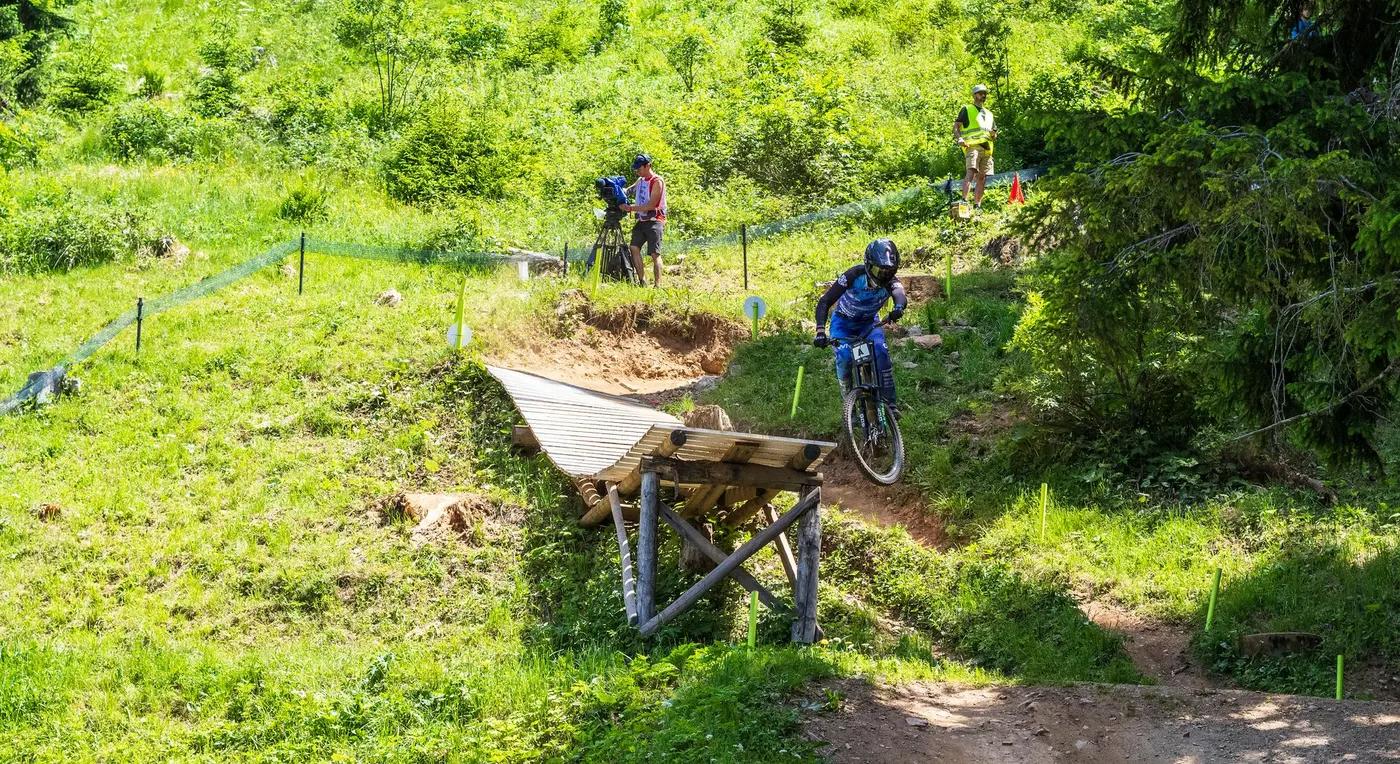
Mostly natural alpine singletrack (flowing to rocky/blocky), forest and pasture trails; some machine-built freeride/bikepark features (Gotschna A-Line, Farich). Shared with hikers.
Predominantly natural alpine singletrack 'from flowing to blocky/rocky' rather than manicured berms; high-alpine exposure on ridge trails, roots, rock steps and off-camber sections. Gotschna Freeride adds tables, banked turns and jumps.
Marked/signed MTB tour network across the region; strong Trailforks coverage. 'Share the trail' signage - obey trail-status signs. Downloadable GPX/regional trail map recommended for the large network.
Trails shared with hikers under a 'share the trail' ethos; busier near lift stations and Davos in July-August, but the 700 km network disperses riders and solitude is easy to find on remote enduro loops.
Season & conditions
Bike/lift season runs approx end of May to mid-October; high-alpine trails snow-free roughly late June to October.
Summer to early autumn; peak riding June-September.
Alps Epic Trail Davos (IMBA Epic, Switzerland's longest singletrack, approx 45 km); Bahnentour 10,000 m-vertical challenge; free skills-training sessions and free lift/transport perks via bike hotels.
High-alpine exposure - afternoon thunderstorms, rapid weather changes, cold at altitude, and slippery roots/rock when wet; early/late season snow on the highest trails.
Getting there & gear
No trail fee; lift bike-transport day pass approx CHF 10 (complimentary with 1+ night in a bike hotel, which also gives free mountain railways and local transport). No lottery.
Permits and operators change - confirm before booking.
Davos and Klosters reached by car and Rhaetian Railway; lift bases at Parsenn/Gotschna (Davos Dorf/Klosters), Jakobshorn (Davos Platz), Rinerhorn and Madrisa. Farich Bikepark in Davos Dorf.
Bikes carried on Parsenn, Gotschna, Jakobshorn, Rinerhorn and Madrisa cable cars/lifts; local Bikeshuttle taxi service; free public transport and Rhaetian Railway (Klosters-Filisur) with lodging. Bike hotels include bike transport.
All-mountain/enduro bike and protection recommended for alpine natural trails; carry water and layers for altitude. Mobile coverage good in valleys, patchier on remote high trails. Bike hotels offer wash/repair. (est)
Bike shops, rental and repair in Davos/Klosters; lift-station restaurants; Farich Bikepark, pumptracks (incl. Jenaz), skills areas; bike-hotel lockable storage and wash service.
Bikeschule Klosters/Davos, Swiss Bike School, Freeride Bikeschule (Swiss Cycling Guides), Bike-Academy; TCD Trailworks (trail crew) / Flying Metal Crew (Farich builder). Nearby Trailforks regions: Bike Kingdom (Lenzerheide), Sankt Antonien, Furstenwald.
Hazards & rescue
Shared hiker traffic (brake to walking pace when overtaking, yield on narrow trails); close pasture fences; high-alpine exposure and remoteness on long enduro loops; obey trail-status signs.
Not required; region is self-guided with marked trails. Guiding/skills courses available (Bikeschule Klosters/Davos, Swiss Bike School, Freeride Bikeschule, Bike-Academy); bike hotels arrange guides.
Dense valley/lift network provides frequent bail-out points to stations and roads; Swiss alpine rescue via 144 (medical) / 1414 (Rega air rescue). (est)
This profile is desk research, compiled from public sources - not a first-hand mountain-bike network report. Coordinates are approximate.